ACLS Introduction
The Initial Assessment
ACLS Basic Life Support
- ACLS BLS for Adults
- Initiating the Chain of Survival
- 2020 BLS Guideline Changes
- One Rescuer Adult BLS CPR
- Two Rescuer Adult BLS CPR
- Adult Mouth-to-Mask and Bag-Mask Ventilation
- Adult Basic Life Support (BLS) Algorithm
- BLS for Children/Infants
- CPR Steps for Children
- One-Rescuer BLS/CPR for Infant (newborn to age 12 months)
- CPR Steps for Infants
- Child/Infant Mouth-to-Mouth Ventilation
Advanced Cardiac Life Support
Principles of Early Defibrillation
Systems of Care
ACLS Cases
- ACLS Cases Respiratory Arrest
- Pulseless Ventricular Tachycardia and Ventricular Fibrillation
- Pulseless Electrical Activity Asystole
- Adult Cardiac Arrest Algorithm
- Post-Cardiac Arrest Care
- Adult Immediate Post-Cardiac Arrest Care Algorithm
- Symptomatic Bradycardia
- Adult Bradycardia with Pulse Algorithm
- Tachycardia
- Stable And Unstable Tachycardia
- Adult Tachycardia With Pulse Algorithm
- Acute Coronary Syndrome
- Acute Coronary Syndrome Algorithm
- Acute Stroke
- Acute Stroke Algorithm
ACLS Essentials
ACLS Skills Training
ACLS Exam
ACLS BLS for Adults
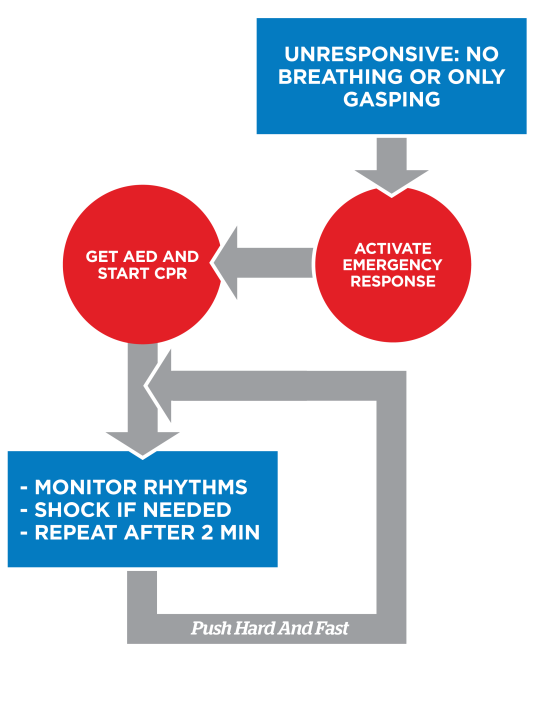
BLS for adults focuses on doing several tasks simultaneously. In many situations, more than one person is available to do CPR. This choreographed method includes performing chest compressions, managing the airway, delivering rescue breaths, and using the AED, all as a team. As a team, your primary objective for CPR is to maximize chest compression time and minimize any pauses. By coordinating efforts, a team of rescuers can save valuable seconds when time lost equals damage to the heart and brain.
Simple Adult BLS Algorithm