- ACLS BLS for Adults
- Initiating the Chain of Survival
- 2020 BLS Guideline Changes
- One Rescuer Adult BLS CPR
- Two Rescuer Adult BLS CPR
- Adult Mouth-to-Mask and Bag-Mask Ventilation
- Adult Basic Life Support (BLS) Algorithm
- BLS for Children/Infants
- CPR Steps for Children
- One-Rescuer BLS/CPR for Infant (newborn to age 12 months)
- CPR Steps for Infants
- Child/Infant Mouth-to-Mouth Ventilation
- ACLS Cases Respiratory Arrest
- Pulseless Ventricular Tachycardia and Ventricular Fibrillation
- Pulseless Electrical Activity Asystole
- Adult Cardiac Arrest Algorithm
- Post-Cardiac Arrest Care
- Adult Immediate Post-Cardiac Arrest Care Algorithm
- Symptomatic Bradycardia
- Adult Bradycardia with Pulse Algorithm
- Tachycardia
- Stable And Unstable Tachycardia
- Adult Tachycardia With Pulse Algorithm
- Acute Coronary Syndrome
- Acute Coronary Syndrome Algorithm
- Acute Stroke
- Acute Stroke Algorithm
Acute Coronary Syndrome
Acute coronary syndrome (ACS) is a collection of clinical presentations including unstable angina, non-ST-elevation myocardial infarction (NSTEMI), and ST-elevation myocardial infarction (STEMI). ACS is classically recognized by one or more of the following symptoms: crushing chest pain, shortness of breath, pain that radiates to the jaw, arm, or shoulder, sweating, and/or nausea or vomiting. It is important to note that not all individuals with ACS will present with these classic findings, particularly women and individuals with diabetes mellitus. It is impossible to determine a specific cardiac event from the ACS symptoms; therefore, ACS symptoms are managed in the same way.
Every individual with these symptoms should be evaluated immediately. If an individual appears to be unconscious, begin with the BLS Survey, and follow the appropriate pathway for advanced care. If the individual is conscious, proceed with the pathway below.
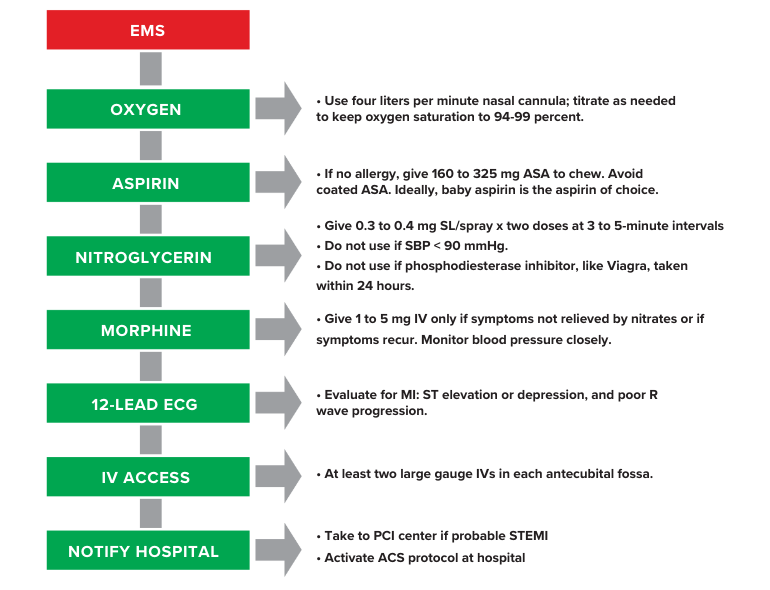
Figure 40