ACLS Introduction
The Initial Assessment
- The Initial Assessment
ACLS Basic Life Support
- ACLS BLS for Adults
- Initiating the Chain of Survival
- 2020 BLS Guideline Changes
- One Rescuer Adult BLS CPR
- Two Rescuer Adult BLS CPR
- Adult Mouth-to-Mask and Bag-Mask Ventilation
- Adult Basic Life Support (BLS) Algorithm
- BLS for Children/Infants
- CPR Steps for Children
- One-Rescuer BLS/CPR for Infant (newborn to age 12 months)
- CPR Steps for Infants
- Child/Infant Mouth-to-Mouth Ventilation
Advanced Cardiac Life Support
Principles of Early Defibrillation
Systems of Care
ACLS Cases
- ACLS Cases Respiratory Arrest
- Pulseless Ventricular Tachycardia and Ventricular Fibrillation
- Pulseless Electrical Activity Asystole
- Adult Cardiac Arrest Algorithm
- Post-Cardiac Arrest Care
- Adult Immediate Post-Cardiac Arrest Care Algorithm
- Symptomatic Bradycardia
- Adult Bradycardia with Pulse Algorithm
- Tachycardia
- Stable And Unstable Tachycardia
- Adult Tachycardia With Pulse Algorithm
- Acute Coronary Syndrome
- Acute Coronary Syndrome Algorithm
- Acute Stroke
- Acute Stroke Algorithm
ACLS Essentials
ACLS Skills Training
ACLS Exam
The Initial Assessment
Determining whether a patient is conscious or unconscious can be done very quickly. If you notice a person appearing in distress, lying down in a public place, or possibly injured, call out to them.
Make sure the scene is safe before approaching the individual and conducting the BLS or ACLS Survey.
When encountering an individual who is “down,” the first assessment to make is whether they are conscious or unconscious.
If the individual is unconscious, then start with the BLS Survey (Figure 20) and move on to the ACLS Survey (Figure 9).
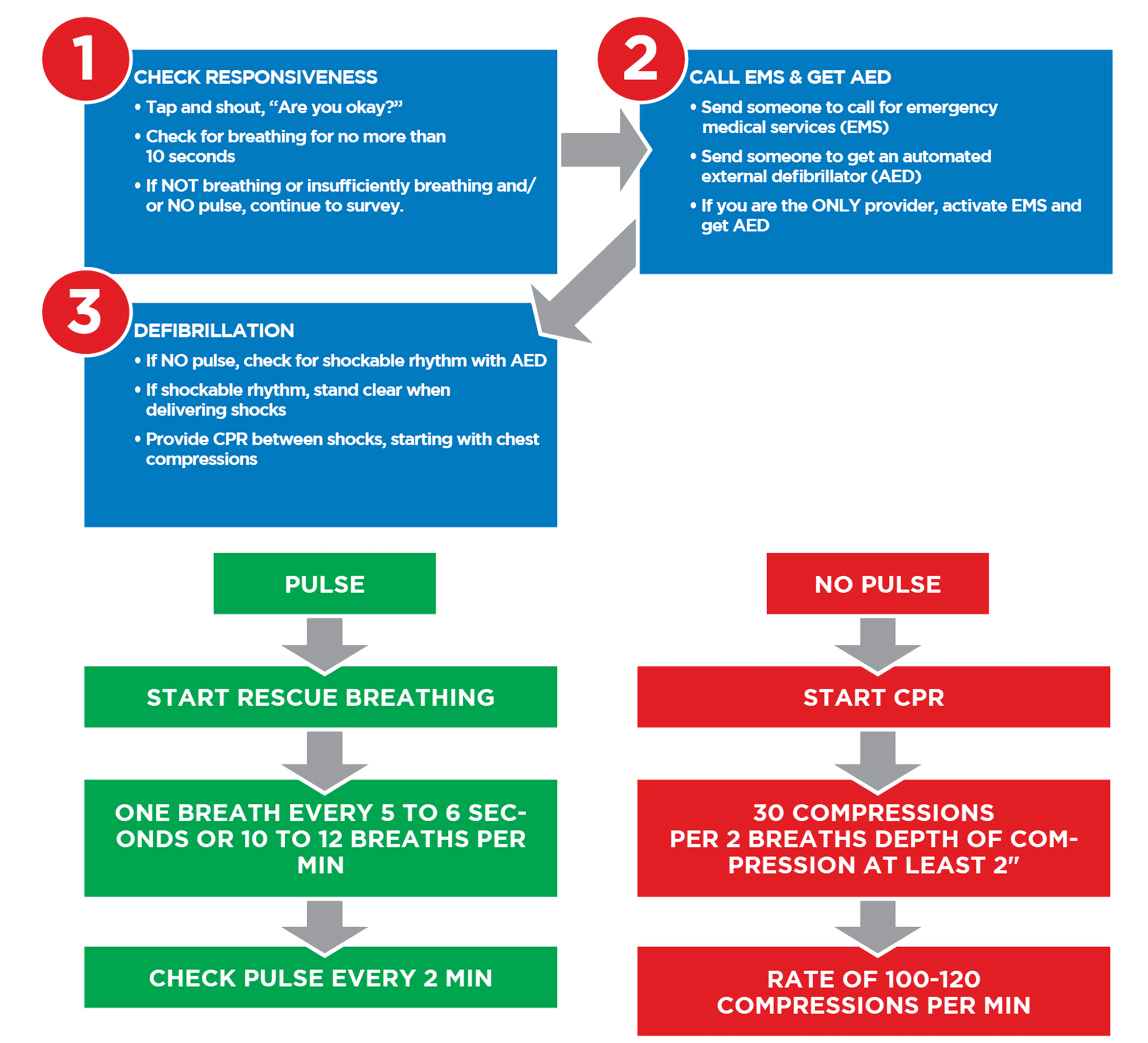

If they are conscious and responsive, obtain consent to provide care and continue assessment and questioning to determine the next steps.